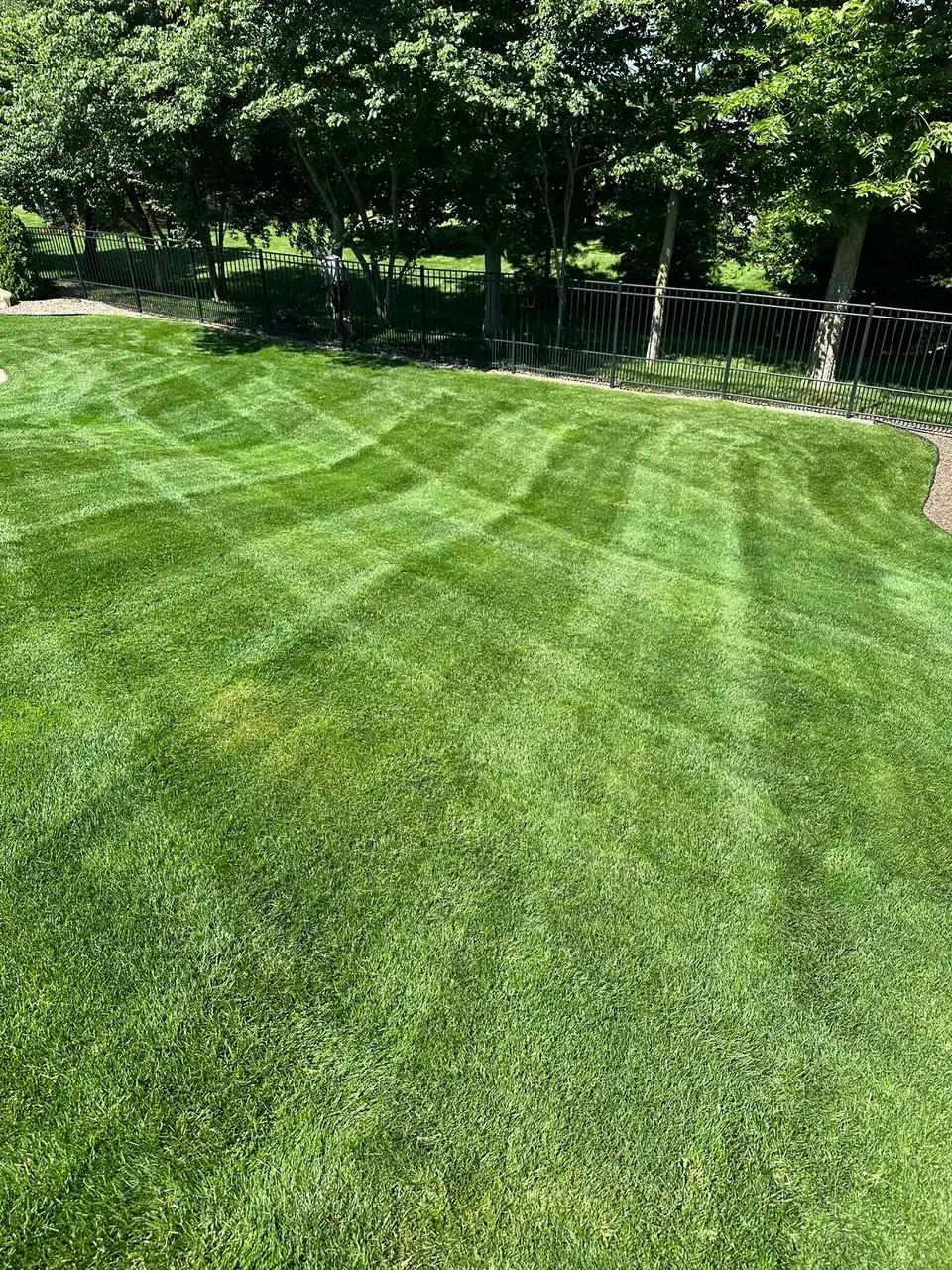
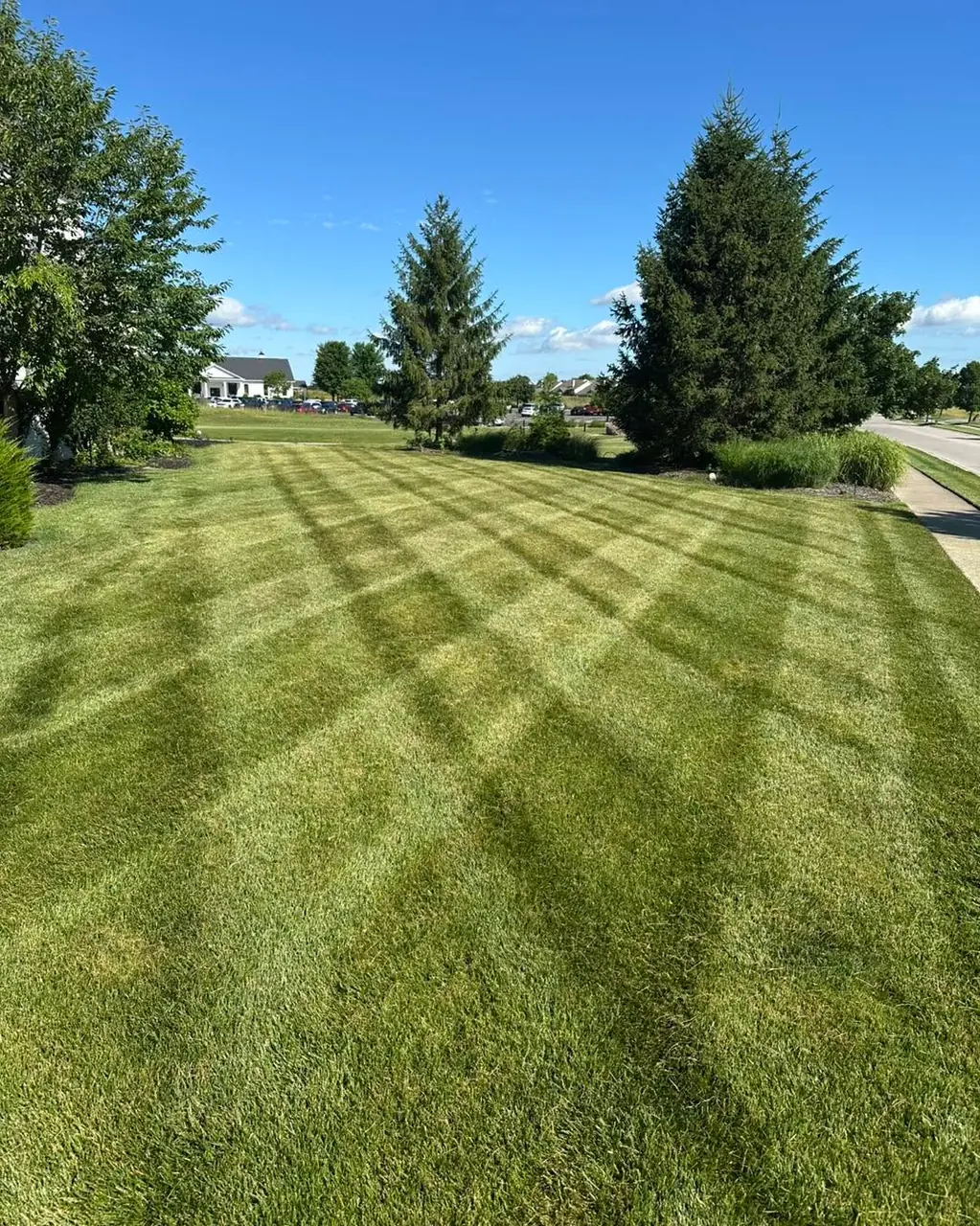
Removal, done down to the root
Cutting an overgrown shrub off at ground level is not removal. It resprouts, usually with several stems where there was one, and next year the problem is worse. We take the root ball out.
A full bed reset means the plants come out, the old mulch and any decayed weed fabric come off, the soil gets turned over, and the edge is recut. Weed fabric is worth a word: it works for about two seasons, then mulch breaks down on top of it into a perfect seed bed and the weeds root into the fabric itself. Pulling those is far worse than pulling weeds out of soil, which is why we usually take the fabric out rather than adding another layer on top.
Planting for the space the plant will fill
Most bad foundation planting comes from one mistake: buying for the size in the pot. A shrub tagged as reaching six feet reaches six feet, and putting it two feet off the house means you are either cutting it back hard forever or pulling it out in eight years.
We space for mature size, which means a new bed looks a little sparse the first season and correct from year three on. Filling the gaps with annuals or perennials for the first couple of years is a better answer than crowding shrubs and paying for it later.
Plant choice follows the site. Sun exposure, how wet the spot stays after a storm, and whether deer browse the neighborhood all narrow the list quickly. Indiana clay drains slowly, so anything that wants sharp drainage goes in raised or amended soil rather than straight into a hole in clay, which otherwise acts like a bucket and drowns the roots.
Mulch and edging
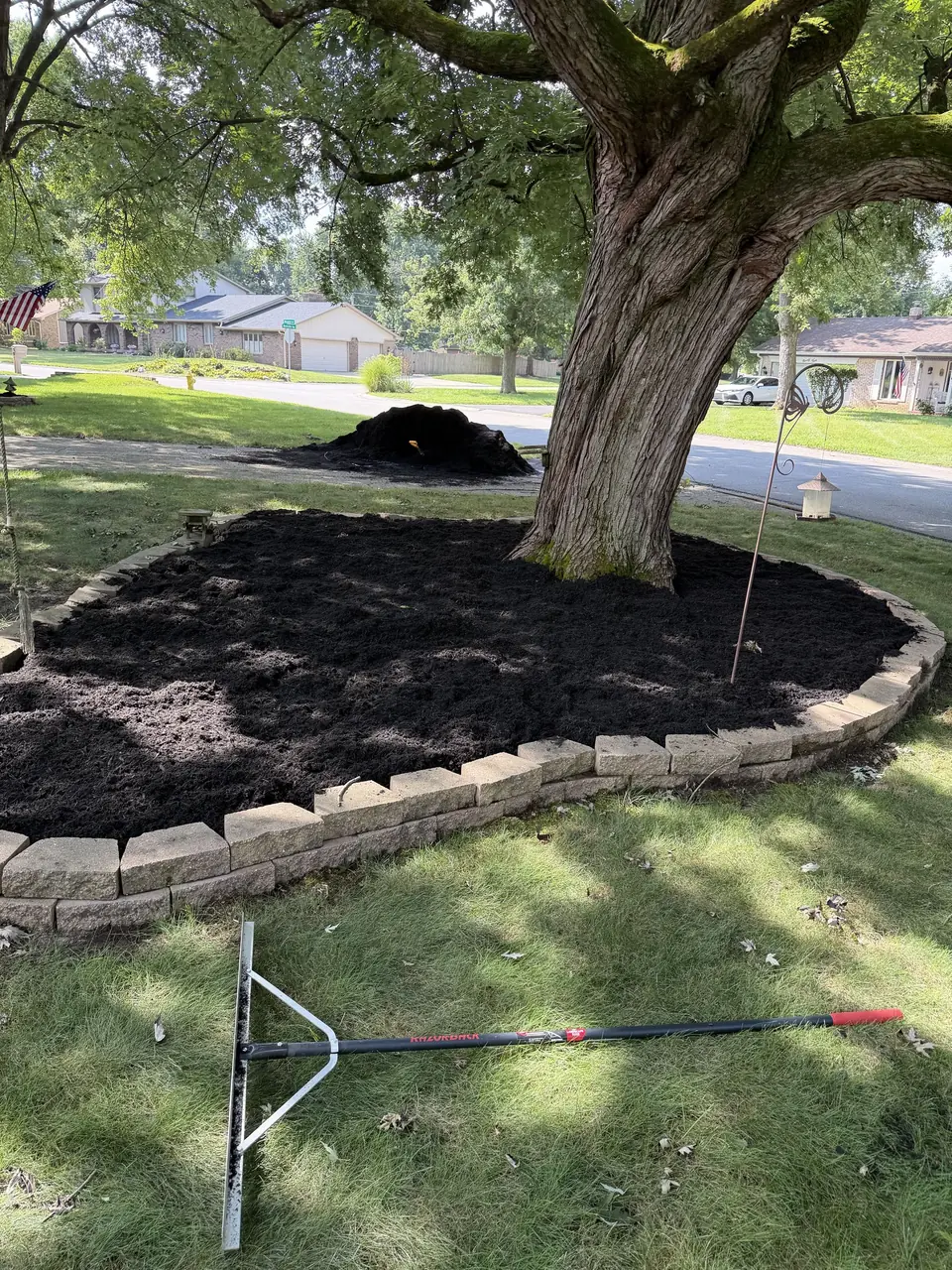
Mulch goes down two to three inches deep. Deeper is not better: it keeps water from reaching the soil and it holds moisture against stems and trunks, which invites rot.
Mulch never goes against a trunk. Piling it up into a cone, the thing you see on commercial properties everywhere, keeps bark permanently wet, encourages roots to grow up into the mulch instead of out into soil, and slowly kills the tree it was supposed to protect. We pull mulch back so the flare at the base of the trunk is visible.
A cut edge, a spade line between bed and turf, holds a season and looks sharper than plastic edging that heaves out of the ground every freeze. Steel or aluminum edging is worth it where you want a permanent line.
Drainage first
A bed that holds water after every storm will kill whatever gets planted in it, and no plant selection fixes a grading problem. Where we find a low spot collecting runoff from a downspout or a slope, we say so before planting rather than after.
Sometimes the fix is small: extending a downspout, regrading a few inches, amending heavy clay. Sometimes it is genuinely a drainage project. Either way it is cheaper to know before the plants go in.
Common questions
- When is the best time to plant in central Indiana?
- Fall is the best window and spring is a close second. Fall planting gives roots months of cool, moist soil to establish before the plant has to face a summer. Summer planting works but the watering commitment is real, and anything installed in July needs consistent water through its first season.
- How deep should mulch be?
- Two to three inches. That is enough to hold moisture and block light from weed seed. Deeper starts working against you: water struggles to get through it to the soil, and mulch held against stems and trunks keeps bark wet and invites rot.
- Should I put down weed fabric?
- Usually not under mulch. It works for a season or two, then the mulch on top breaks down into soil and weeds germinate in that layer and root straight through the fabric. Pulling those is far harder than pulling weeds out of open soil. Fabric earns its place under stone and gravel, where there is no organic layer forming on top.
- Can you take out a bed and just put grass there?
- Yes, and it is a common request when a house has more bed than anyone wants to maintain. The plants and roots come out, the grade gets brought back level with the surrounding lawn, and the area is seeded or sodded.
- Why does my new bed look empty?
- Because it is spaced for what the plants will become. Shrubs planted at their mature spacing look sparse for two seasons and correct from year three. The alternative, planting for instant fullness, means pulling half of it out later. Annuals or perennials in the gaps fill the space while the shrubs grow in.
- Do you haul away what you remove?
- Yes. Plant material, old mulch, fabric, and edging all leave with us. The site gets raked and blown clean before we go.
- Will you work with a design I already have?
- Yes. Bring a plan from a designer or a sketch you did yourself and we will install it, and flag anything that is going to struggle in the spot it is drawn in before we plant it.
Landscaping across Johnson & Morgan County
We run this service in every town we cover. Pick yours for what is specific to it.
Greenwood: A lot of Greenwood foundation planting is now twenty years past the size it was planted for. Removal and replanting is our most requested job here. Old Bargersville: Bed renovation and recutting edges that have crept outward over many seasons. Franklin: Removing landscaping that has outgrown the house and replacing it with planting spaced for what it will become.